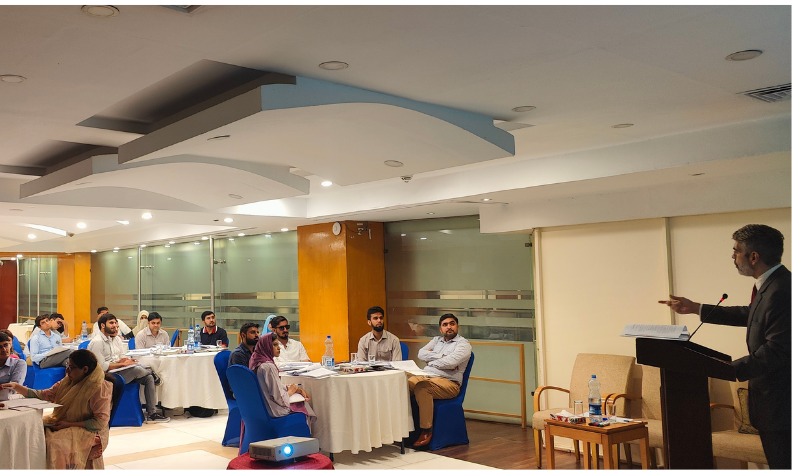
At Asian Environmental Services (AES), our Environmental Training Programs are designed to bridge the gap between regulatory compliance and practical implementation, enabling organizations to operate responsibly in an increasingly complex legal and industrial landscape. At AES, we believe in growing together—strengthening institutional capacity, enhancing environmental stewardship, and building a future where compliance is not a burden, but a strategic advantage.
HSE Trainings
Comprehensive Health, Safety, and Environmental training programs designed to foster a culture of safety and operational excellence.
Environmental Compliance
Training on local and international regulatory requirements to ensure your projects remain legally sound and environmentally responsible.
Waste Management Solutions
Technical workshops on waste minimization, hazardous waste handling, and circular economy integration for industrial operations.
HSE Audits & Assessments
Systematic evaluations of workplace safety and environmental performance to identify gaps and ensure continuous improvement.
ESG & Sustainability Reporting
Empowering organizations to track, measure, and report their Environmental, Social, and Governance performance to global stakeholders.
Resource Efficiency & CP
Consultancy and training on Cleaner Production (CP) to reduce raw material consumption and improve operational margins.
IFC / ADB / Worldbank Standards
Specialized training on aligning projects with international lender requirements and performance standards.
ISO Standards (14001, 45001)
Implementation and awareness training for ISO 14001 (Environment) and ISO 45001 (Health & Safety) management systems.
Lab Management (ISO 17025)
Expert guidance on achieving and maintaining accreditation for testing and calibration laboratories.